English
Regulation Size Cornhole Boards Buyer Spec Checklist
Created on 03.16
We love the sound of a bean bag hitting a wooden surface during a sunny afternoon. Our team knows that picking the right gear can feel tough with so many options. We want to ensure that every match you play feels like a pro event.
regulation size cornhole boards
Choosing a cornhole regulation size set ensures your home practice sessions truly prepare you for local tournaments. These official platforms offer the exact dimensions and weight required for fair play. Mastery of the game starts with using equipment that meets the highest standards.
We checked the most vital details to help you make a smart choice. Buying the best equipment doesn't have to be a guessing game. Our list makes it easy to spot high-quality boards while avoiding common mistakes.
Key Takeaways
- Official platform surface dimensions.
- Standard equipment weight limits.
- Specific hole diameter and positioning.
- High-grade wood material quality.
- Sturdy frame and leg construction.
- Smooth surface finishes for better slide.
Understanding Official Tournament Standards
The American Cornhole Organization (ACO) has rules for official tournaments. These rules cover the size and features of official cornhole boards. If you want to play in official tournaments, your tournament size cornhole boards must follow these rules.
It's important to know these standards to make sure your equipment is okay. The ACO has specific rules for the boards' size, materials, and surface. For example, the boards' dimensions, the hole's size and where it is, and the surface material are all set.
Some key things to think about include:
- The size and thickness of the boards
- The material used for the playing surface
- The hole's diameter and position on the board
Following these standards means your cornhole boards are ready for official tournaments. The ACO says, "All equipment used in official tournaments must meet the standards outlined in our official rulebook."
We will explore the specific dimensions and features needed for official play in the next sections.
Essential Regulation Size Cornhole Boards Dimensions
The American Cornhole Organization (ACO) has strict rules for cornhole board dimensions. These rules help ensure fair play. Knowing these dimensions is key to making a board that meets the standards.
Playing Surface Requirements
Regulation cornhole boards must meet specific size and thickness requirements.
Length and Width Specifications
The ACO says regulation boards should be 48 inches long and 24 inches wide. This size gives players enough room to throw the bags well.
Board Thickness Standards
The board's thickness is also important. The ACO doesn't give a specific thickness. But, it's best to make it at least 3/4 inch for a solid playing surface.
Hole Specifications
The hole on a cornhole board is a key feature that needs precise measurements.
Diameter Measurements
The hole should be 6 inches in diameter, as the ACO states. This size makes it easy for the bags to go through.
Center Point Placement
The hole's center should be 9 inches from the top and centered side to side. This ensures the game is played fairly and consistently.
Dimension | Measurement |
Length | 48 inches |
Width | 24 inches |
Hole Diameter | 6 inches |
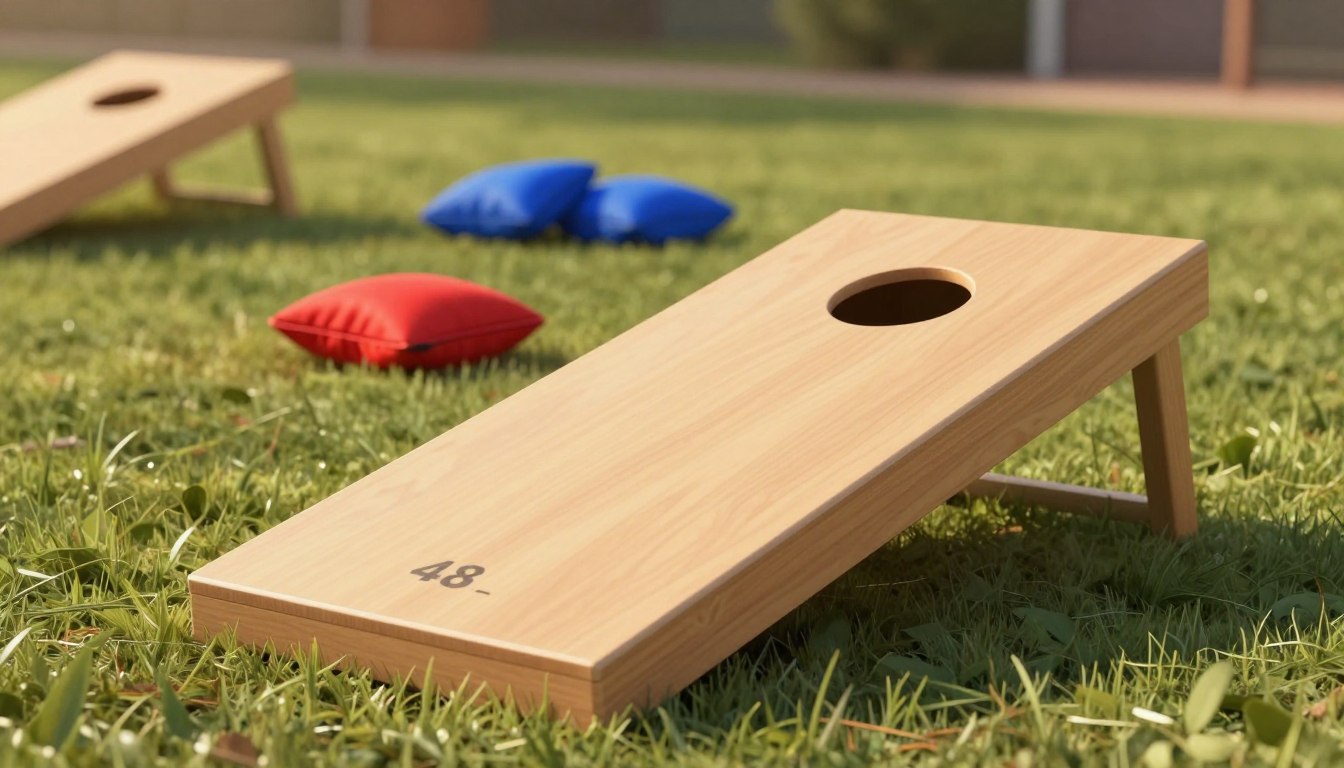
A detailed, realistic illustration of a regulation size cornhole board, prominently displayed in the foreground, measuring 48 inches long and 24 inches wide. The board features a smooth, polished wood surface with a 6-inch diameter hole positioned 9 inches from the back. In the middle ground, there are two cornhole bags, one red and one blue, resting beside the board to provide context. In the background, a grassy outdoor setting with a soft-focus effect creates a relaxed atmosphere. The lighting is warm and natural, suggesting a sunny day, while the camera angle is slightly elevated, showcasing the dimensions clearly. The image should convey a sense of fun and competition, making it a perfect visual reference for enthusiasts and buyers alike.
Material and Construction Checklist
To meet official tournament standards, focus on materials and construction. The materials and how your professional cornhole boards are made affect their durability and how well they play.
Approved Wood Materials
The ACO suggests using top-notch plywood or solid wood for cornhole boards. Your choice between plywood and solid wood depends on durability, cost, and looks.
Plywood Grade Requirements
For plywood, pick a grade that's smooth, free of voids, and has few defects. The thickness must be even for a flat playing area.
Solid Wood Options
Solid wood cornhole boards are durable and look great. Hardwoods like maple or birch are favorites because they're dense and have a smooth finish.
Edge Banding and Trim
Edge banding is key to protecting plywood edges from damage and improving the board's look. A strong trim around the edges also boosts the board's strength.
Hardware Quality Standards
The hardware, like screws and bolts, must be high quality. This ensures the cornhole board stays strong and works well over time.
Choosing the right materials and construction methods meets official rules and improves play.
Platform Height and Angle Specifications
To ensure a level and challenging playing surface, the height and angle of regulation size cornhole boards must meet specific standards. The American Cornhole Organization (ACO) provides detailed guidelines for these specifications.
Front Edge Height Requirements
The ACO states that the front edge of the cornhole board should be positioned between 3-4 inches from the ground. This height is crucial for ensuring the board is easily accessible and that the game remains fair.
Back Edge Height Requirements
The back edge of the cornhole board must be 12 inches high. This height, in conjunction with the front edge, establishes the correct slope for the game.
Resulting Slope Angle
The slope angle is formed by the front edge at 3-4 inches and the back edge at 12 inches. This slope is essential for the bags to slide correctly during gameplay.
Leg Design and Stability
The design of the legs and the overall stability of the board are of significant importance. The legs must be robust and adjustable to maintain a level and stable board during play.
Here is a summary of the key specifications:
Specification | Measurement |
Front Edge Height | 3-4 inches |
Back Edge Height | 12 inches |
Resulting Slope | Gradual slope from back to front |
Surface Playing Characteristics
The material and finish of a regulation size cornhole board greatly impact gameplay. The surface must be consistent and enjoyable for all players. We'll look at what makes a surface ideal for playing.
Approved Surface Materials
Choosing the right material for a cornhole board is key. It should be smooth, even, and durable.
Paint and Coating Options
Some boards use paint or coatings for the finish. High-quality coatings make the surface smooth and durable. A cornhole expert says,
"A well-coated surface can significantly enhance the overall playing experience by providing a consistent slide for the bags."
Laminate Surfaces
Laminate surfaces are also popular for cornhole boards. They are durable and smooth, perfect for heavy use. For tournament boards, laminate is a good choice.
Texture and Speed Rating
The surface's texture and speed rating are crucial. A surface that's too rough or too smooth can affect gameplay. The ideal surface should strike a balance, offering a consistent speed and texture that challenges players.
Bag Slide Performance
The surface's performance is key for bag slide. It should allow for a smooth, consistent slide. The American Cornhole Association notes,
"The surface should be smooth enough to allow bags to slide consistently, but not so smooth that it becomes unchallenging."
Weight and Portability Features
When it comes to professional cornhole boards, weight and portability are key. This is true for those who often move their gear to tournaments or events.
A regulation cornhole set needs to be both functional and easy to move. The boards' weight is a big deal.
Official Weight Range
The official weight range for cornhole boards can change. But most regulation cornhole set dimensions say the boards should be strong but not too heavy.
Folding Mechanisms
Folding mechanisms are a must for better portability. A good folding system makes moving and storing easy.
Carrying Handles and Storage
Carrying handles and storage are also important. Look for boards with strong handles. Also, think about storage bags or cases for extra protection.
A detailed view of a regulation cornhole set, showcasing two cornhole boards with precise dimensions of 24 inches wide by 48 inches long, positioned at a slight angle for visual clarity. The boards are made of plywood with a smooth finish, displaying vivid colors and professional designs on the surface. Each board has a centered hole measuring 6 inches in diameter. In the foreground, include a set of lightweight cornhole bags in vibrant colors, neatly arranged, emphasizing portability. The background features a soft-focus grassy park setting under clear blue skies, evoking a friendly and inviting atmosphere. Use warm natural lighting to enhance the scene, with an emphasis on detail and texture, capturing the essence of a fun outdoor game. The angle should be eye-level to highlight both the boards and bags effectively.
Durability and Quality Markers
To keep your cornhole game going strong, focus on the quality of your gear. High-quality cornhole boards can handle regular play and different weather.
Weather Resistance Ratings
For outdoor games, it's key that cornhole boards can stand up to the weather. Weather resistance ratings show how well they handle the elements.
UV Protection Features
UV protection stops wood from breaking down from the sun. Look for boards with UV-resistant coatings or treatments.
Moisture Resistance
Moisture can harm the wood and mess up the game. Boards that resist moisture can handle rain and high humidity.
Structural Integrity Tests
Regular tests check if cornhole boards are strong and safe. These tests find any weak spots in the build.
Certification and Compliance
Certification from groups like the American Cornhole Organization (ACO) means the boards meet official standards.
American Cornhole Organization Approval
ACO approval shows the boards are of high quality and follow official standards.
Manufacturer Warranties
A good warranty from the maker shows they trust their product's durability and quality.
Feature | Description | Importance |
UV Protection | Prevents wood deterioration from sun exposure | High |
Moisture Resistance | Withstands rain and high humidity | High |
Structural Integrity Tests | Ensures the boards are sturdy and safe | High |
ACO Approval | Meets official cornhole standards | High |
Conclusion
Investing in regulation size cornhole boards is more than just buying a piece of equipment. It's about improving your game. Our detailed checklist helps you pick the right board, covering everything from size and material to how it feels and lasts.
Choosing tournament size boards means our games are fun, challenging, and competitive. It doesn't matter if you play for fun or to win. The right equipment is key.
Make sure to check our checklist to ensure your boards meet all the standards. This focus on detail will make your game better and more fun for everyone.
FAQ
What are the exact cornhole board dimensions required for tournament play?
The American Cornhole Organization (ACO) says official boards must be 48 inches long and 24 inches wide. The hole should be 6 inches in diameter. It must be centered 9 inches from the top and 12 inches from the sides.
How high should the front and back of the boards be from the ground?
The front edge should be between 3 and 4 inches off the ground. The back edge must be exactly 12 inches high. This ensures a fair challenge for all players.
What materials do you recommend for high-quality tournament size cornhole boards?
Choose boards made from Baltic Birch plywood. Brands like Cornhole Solutions and West Georgia Cornhole are good choices. Boards should be 5/8 inch or 3/4 inch thick for a solid surface.
Why is the surface finish so important for cornhole regulation size sets?
The finish affects how the bag slides. Boards should have a smooth, sanded surface and a semi-gloss coating. This ensures the board is neither too slick nor too sticky.
Are there specific weight requirements we should look for in a regulation set?
The ACO focuses on dimensions, but weight is a quality indicator. A good set weighs 25 to 30 pounds per board. This weight keeps the boards steady when hit by a bag.
How can we tell if a board is actually "regulation" before we buy it?
Check the manufacturer's specs against the ACO checklist. Look for mentions of regulation size and cross-bracing in the description. Real official boards focus on quality and precise measurements, not just being light.